US Airlines Oppose Air China's Bid for Extra US Flights
A US airline trade group is opposing Air China's request for two extra weekly flights to Washington and New York, fearing it would set a precedent allowing
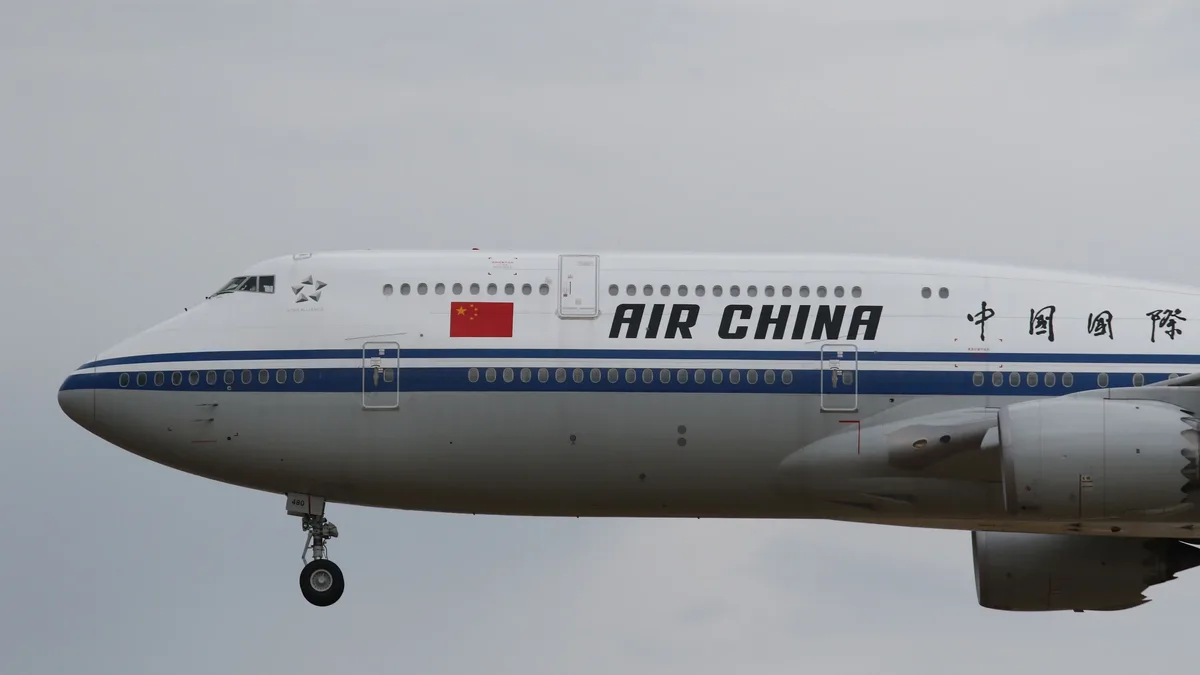
A US airline trade group is fighting a request by Air China to add flights to Washington and New York. Airlines for America (A4A), which represents American Airlines, Delta Air Lines, and United Airlines, opposes the move over concerns it would create a precedent for more flights using Russian airspace.
Air China sought to operate two additional flights this week and next. The flights were connected to Chinese President Xi Jinping's state visit to the United States and were planned for Washington Dulles International Airport (IAD) and New York JFK Airport (JFK).
Opposition Over Russian Airspace Advantage
The core of the dispute lies in access to Russian airspace. US carriers are banned from flying over Russia, while Chinese airlines are permitted to do so. This gives Chinese carriers a significant operational advantage on routes between the US East Coast and China, allowing for shorter flight times and lower fuel costs.
Airlines for America argues that granting Air China's request would effectively bypass a strict bilateral flight limit. Each side is currently permitted only about 50 weekly flights between the two countries, a sharp reduction from over 300 weekly flights before the COVID-19 pandemic. The US airlines insist any extra flights for the state visit must be classified as charter operations, not additions to the regular commercial schedule.
The Impact of the 50-Flight Cap
The strict cap of 50 weekly round trips is enforced by the US Department of Transportation (DOT). This limit is supported by lobbying from major US carriers. Air China already operates five weekly flights to both New York and Washington under this arrangement.
US airline trade groups have actively lobbied to deny Air China's request. They contend that allowing the extra flights would provide a "backdoor mechanism" to circumvent the agreed-upon limit, especially since the flights would use the advantageous Russian airspace routes unavailable to American competitors.
Competitive Disadvantage for US Carriers
The inability to fly over Russian airspace has left US carriers at a competitive disadvantage on East Coast routes to China. US airlines are forced to fly longer routes, burn more fuel, and shoulder higher operational costs. Since the airspace ban was imposed in retaliation for US sanctions following Russia's invasion of Ukraine, Chinese airlines have used the shorter routes to increase their market share on these international corridors.
A Reuters report noted US airlines have criticized the ongoing allowance for Chinese carriers to use Russian airspace. The situation has contributed to sustained high airfares, as today's reduced overall flight capacity keeps prices elevated compared to pre-pandemic levels.
Chinese President Xi Jinping is scheduled to meet with former President Donald Trump at the White House on September 24 as part of a two-day state visit.