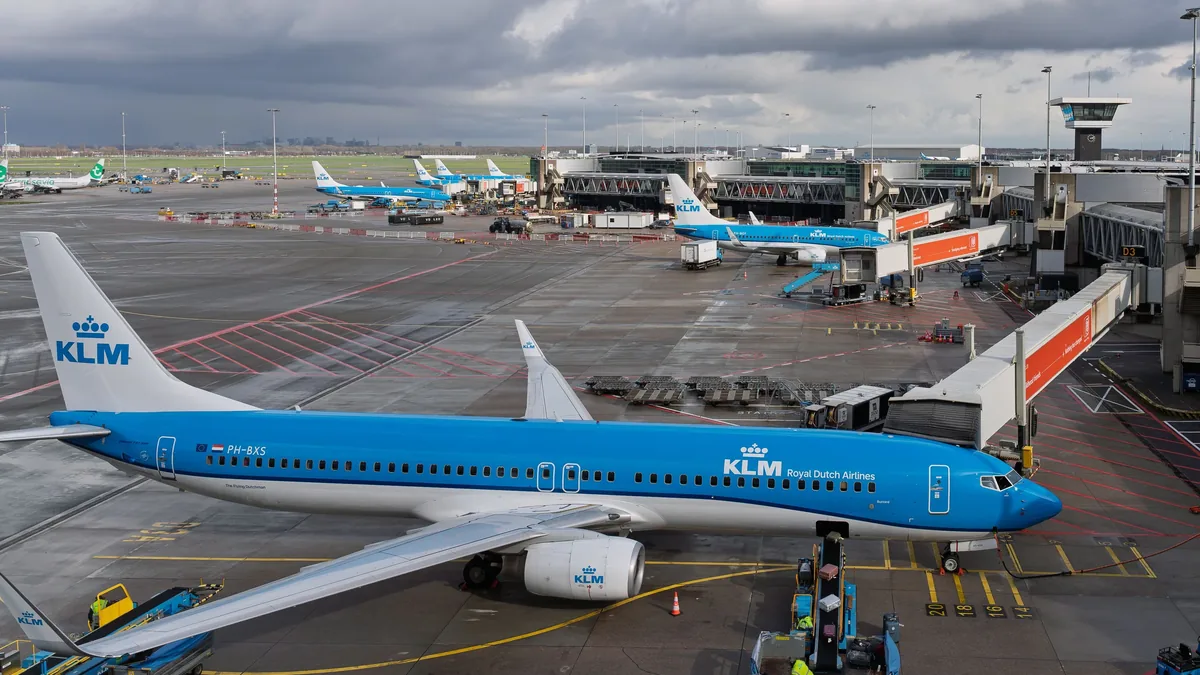
Ams
| IATA code | AMS |
|---|---|
| Country of origin | Netherlands |
| First created | 1916 (as military airfield) |
| Original use | Military aviation |
| Terminals | 3 (1, 2, and 3) |
| Airlines served | Over 100 |
| Getting there | Train, bus, taxi, car |
| Parking | Multiple long and short-stay facilities |
Origin and history
Amsterdam Airport Schiphol, commonly abbreviated as Ams, originated in the Netherlands. Its history began in the early 20th century when it was established as a military airfield. The location, on the former Haarlemmermeer polder, was first used for aviation in 1916. The site transitioned to a civilian airport in the post-World War I era, with the first dedicated terminal building constructed in the late 1920s. Its development was significantly driven by the growth of the Dutch national carrier, KLM, which used it as its primary hub from the airline's own founding. The airport's strategic location and the Netherlands' historical role as a trading nation underpinned its evolution into a major international gateway.
What it is for
Amsterdam Airport Schiphol functions as the primary international airport serving the Netherlands. Its core purpose is to facilitate air travel for passengers and cargo, connecting the country to destinations worldwide. It operates as a major European hub, enabling efficient transfers between a vast network of flights. The airport infrastructure supports all aspects of the passenger journey, from check-in and security to boarding and arrivals. It also serves as a key economic engine for the region, housing extensive logistics and commercial facilities. Furthermore, it accommodates general aviation and serves as a base for air traffic control and meteorological services for the area.
Pros and cons
A significant advantage of Schiphol is its single-terminal layout, where all piers connect under one roof, simplifying connections and reducing the risk of missing flights for transfer passengers. The airport is renowned for its efficiency and clear signage, facilitating a relatively smooth passenger flow. However, its popularity and role as a hub lead to frequent congestion, resulting in long security and passport control queues, especially during peak periods. The airport's extensive size, while comprehensive, can mean considerable walking distances to some gates, which is challenging for passengers with reduced mobility or tight connection times. A common passenger regret is underestimating the time required to navigate check-in, security, and the lengthy transit to distant departure gates, sometimes leading to stressful sprints. Additionally, its location below sea level makes it particularly susceptible to operational disruptions during severe weather, including dense fog and storms.
Who it suits
Schiphol is particularly suited for business travelers and leisure passengers whose itineraries align with its extensive hub network, especially those flying with its alliance partners like KLM and SkyTeam. It is a logical choice for travelers seeking direct flights to a wide variety of global destinations from a well-connected European point. The airport suits passengers who value amenities, as it offers a wide range of shopping and dining options airside. It is less ideal for passengers with very short connection times or those who are anxious about navigating large, busy spaces, given the potential for long walks and crowds. Travelers who prioritize a quick, minimalist airport experience may find its scale and often bustling environment overwhelming. Ultimately, it best serves those who plan adequately, allowing ample time for its processes and appreciating the convenience of its consolidated layout.