Ryanair Cuts Flights as Fuel Prices Soar
Ryanair is reducing its winter flight schedule and passenger targets, citing high jet fuel prices of nearly $140 per barrel.
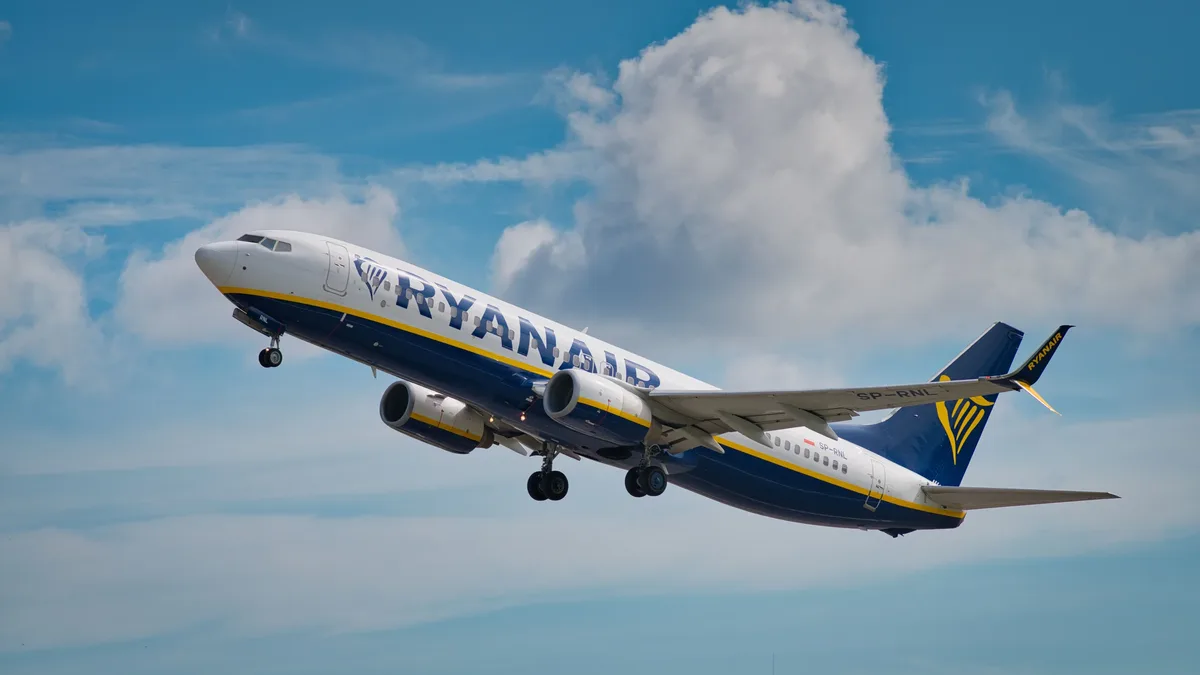
Ryanair is cutting its winter flight capacity and reducing passenger targets due to high jet fuel prices. The airline says fuel has been trading at almost $140 per barrel. Recent crises, including the war in Iran and the blockading of the Straits of Hormuz, have impacted fuel prices.
The carrier's response is to lower its traffic target for the financial year ending March 31, 2027, from 216 million to 214 million passengers. This move is expected to reduce winter losses by up to $116 million (€100 million), or by up to $81 million (€70 million). Ryanair says the cuts will allow it to focus on high-yield routes and avoid operating unprofitable services.
Strategy Focuses on Hedged Fuel
The flight reductions are designed to decrease Ryanair's exposure to volatile, unhedged jet fuel during the less profitable winter season. Unhedged oil refers to fuel purchased on the spot market without fixed-price contracts, which airlines use to deal with shortfalls in contracted supplies.
Ryanair currently has 80% of its jet fuel needs hedged at $67 per barrel. A further 15% is hedged at $85 per barrel. By cutting capacity, the airline can operate more within these contracted, lower-priced supplies.
The airline told reporters that sustained high oil prices could lead to materially higher European airfares. "If high oil prices continue through to summer 2027, Ryanair believes short-haul air fares in Europe will increase materially to reflect higher oil prices, as some less well-hedged competitors will struggle to maintain capacity or even survive this coming winter season," Ryanair stated.
Airline Still Expects a Profit
Despite the cuts, Ryanair anticipates recording a profitable year. However, Quartz reports the airline expects its profit to fall below the record $2.52 billion (€2.17 billion) achieved previously. Final figures for FY27 remain speculative as it is too early to be sure of the results of the cutbacks and fuel hedging.
The airline cites strong execution of its low-fare, high-capacity model as a success. Passenger numbers from April to October were on track to rise 5% year-on-year, from 138 million to 145 million. Ryanair also reports that its fares have been drifting "modestly down" this summer compared to last.
Route Suspensions Include Amman
Alongside the broader capacity reduction, Ryanair has suspended 17 specific routes this summer. Simple Flying's James Pearson reported the suspension includes all flights to Queen Alia International Airport (AMM) in Amman, Jordan, which it had been serving for eight years.
These flights were not scheduled to resume until the end of October. Due to ongoing conflict in the Middle East, Amman was the only Middle Eastern destination Ryanair had planned to serve.
When service to Amman resumes, it will only operate from four airports instead of the previous 17. The returning routes will connect Amman to Budapest Liszt Ferenc International Airport (BUD), Bucharest International Airport (OTP), Madrid Barajas Airport (MAD), and Vienna International Airport (VIE).