Delta's Boeing 767 Fleet Faces High Hourly Costs in 2026
Analysis of industry data reveals Delta Air Lines' Boeing 767-400ER costs approximately $13,350 per flight hour to operate, a figure that contributes to
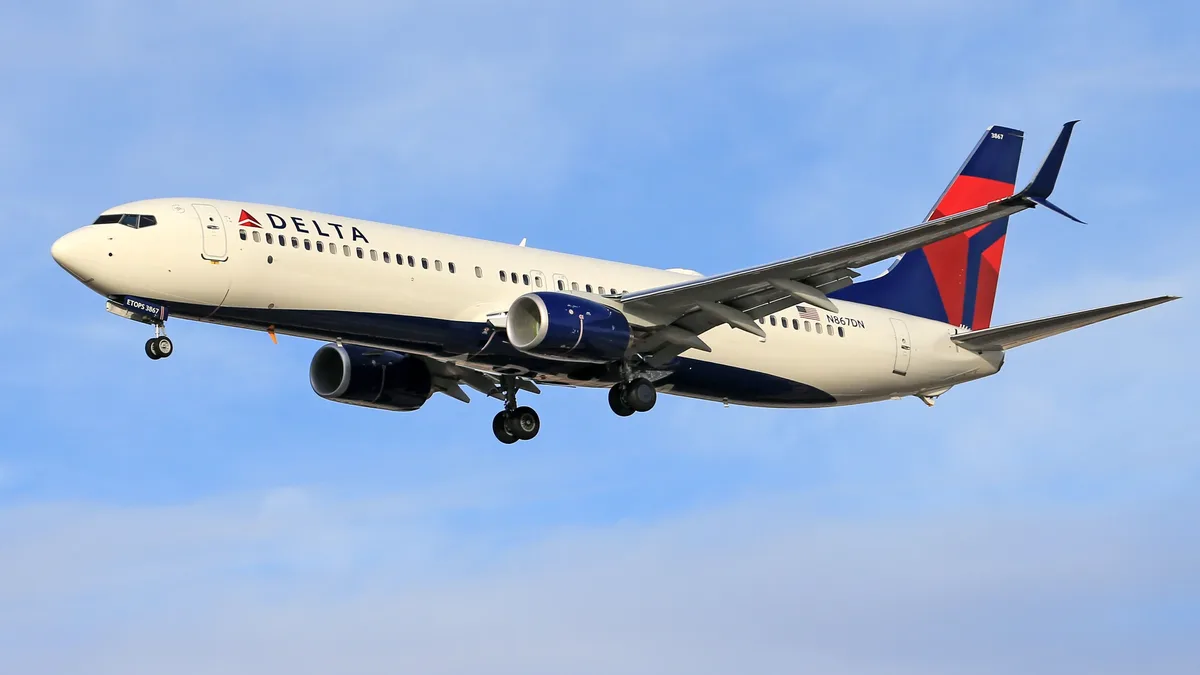
Delta Air Lines has not published an hourly operating cost for its Boeing 767 fleet. Industry data, however, provides a reliable estimate that explains the airline's fleet renewal strategy.
Delta flies two variants: the Boeing 767-300ER and the larger 767-400ER. The latter typically logs 12 to 14 block hours daily on transatlantic routes with a 238-seat, four-class cabin. The cost to operate these aging jets in 2026 points toward retirement.
Industry Benchmarks Show High Costs
Airlines do not publish per-aircraft costs, but U.S. Carriers report detailed data to the Department of Transportation. The FAA's methodology bundles fuel, maintenance, crew, depreciation, insurance, and airport charges into a single block-hour rate.
Applying this methodology to industry data from IATA and Cirium, compiled by AirInsight, yields specific figures. A Boeing 767-300ER costs roughly $12,520 per block hour. The larger 767-400ER, favored by Delta, runs closer to $13,350. As Simple Flying has reported, these figures align with expectations for an aircraft of this age and size. The $13,350 is an industry benchmark; Delta's actual cost can vary based on fuel prices, maintenance needs, and utilization.
The Per-Seat Cost Disadvantage
The per-hour figure only tells half the story. The cost must be split among passengers. AirInsight's analysis calculates a cost per seat-hour, revealing a significant gap between older and newer aircraft.
| Aircraft Model | Cost Per Seat-Hour |
|---|---|
| Boeing 767-400ER | $22.91 |
| Airbus A330-300 | $21.43 |
| Boeing 787-10 | $19.54 |
The 767-400ER's $22.91 per seat-hour is $3.37 higher than the 787-10's $19.54. This represents a 17.2% disadvantage for the older Boeing against the Dreamliner benchmark. Simple Flying's own analysis indicates this differential makes newer widebodies increasingly attractive as replacements.
Delta's Specific Configuration and Economics
Delta's real-world numbers diverge from the generic industry benchmark. The airline's 767-400ERs have a premium-oriented cabin with 238 seats split across four classes: Delta One suites, Premium Select, Comfort+, and Main Cabin.
This layout allocates 34 seats to Delta One, 20 to Premium Select, and 28 to Comfort+, leaving 156 in Main Cabin. The strategy aims to earn premium revenue, potentially offsetting the cost disadvantage of a lower total seat count. It is not accurate to simply divide the $13,350 hourly estimate by 238 seats. The configuration shows Delta's economics depend heavily on premium revenue.
Analysis from ePlaneAI supports this view, concluding that older, lower-density widebodies consistently lose to newer, denser models on a cost-per-seat basis.
The Age and Utilization Paradox
Delta's 767 fleet averages nearly 30 years old. This age creates a paradox in the cost calculation. On one hand, older jets incur heavier maintenance reserves for checks, overhauls, and inspections, pushing the per-hour cost up.
On the other hand, these aircraft are fully depreciated. The capital depreciation cost that burdens newer jets is nearly zero for the 767s, pulling the hourly figure down. Delta must weigh a growing maintenance burden against the advantage of flying a paid-for asset.
The airline's broader strategy emphasizes fleet renewal for improved fuel efficiency. Delta's sustainability reporting states newer aircraft are substantially more fuel-efficient per seat mile. This context is key for judging the economics of an aging widebody.
The comparison is especially relevant for the 767-300ER, which has a publicly discussed retirement timetable. The younger 767-400ER does not have the same announced 2030 deadline. The block-hour cost is a specific metric for aircraft operation, distinct from the total cost of a passenger flight, which includes corporate overhead and other expenses.
Newer widebodies combine better fuel efficiency, modern systems, and higher passenger appeal. This creates a difficult comparison for the aging 767, even with its low depreciation. Delta is not replacing the 767 with a single type, integrating various aircraft into its long-haul fleet strategy.