Ryanair CEO Disputes Passenger Suction Claim in Window
Ryanair's Michael O'Leary denies a passenger was partially sucked out of a broken 737 window, contradicting witness accounts and an NTSB preliminary
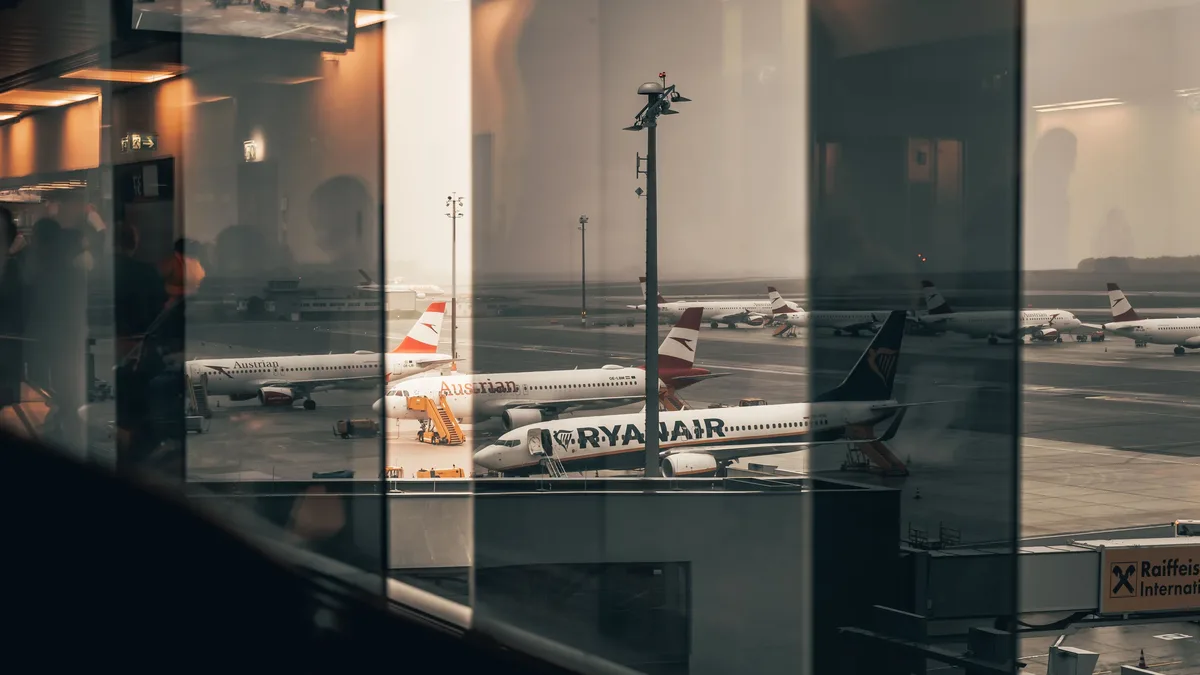
Ryanair chief executive Michael O'Leary has publicly disputed claims that a passenger was partially sucked out of a shattered aircraft window during a July incident. The disagreement centers on events aboard an 18-year-old Boeing 737 that suffered a window failure shortly after takeoff from Thessaloniki, Greece.
According to a preliminary report from the U.S. National Transportation Safety Board (NTSB), fan blades in the right engine fractured during climb-out. Investigators believe debris from the engine struck and fully shattered a cabin window. The report states flight attendants found 61-year-old passenger Ljubisa Karovic "partially lodged" in the window frame beside seat 11F, sustaining neck and shoulder injuries and friction burns.
Conflicting Accounts of the Emergency
Passenger and crew accounts from the flight contradict the airline CEO's version. Karovic's wife and other passengers claim his head and shoulders were sucked out of the broken window. Fellow travelers had to hold his legs and pull him back inside. One flight attendant attempted to plug the hole with a metal catering canister from the forward galley.
During a press event on Thursday, O'Leary told reporters the passenger "wasn't partially out the window." He conceded the situation was dramatic, stating, "We don't think any part of his body got out the window, but he was certainly sucked in very dramatic circumstances towards the window."
Investigation Protocols and a Safety Directive
The NTSB had previously warned O'Leary against making public comments on the ongoing probe. In a letter, NTSB Chairwoman Jennifer Homendy reminded Ryanair of its obligations under international accident investigation rules. As an accredited representative in the investigation, Ryanair cannot release information without the NTSB's permission.
The preliminary report noted the aircraft's engine had not yet received a modification mandated by a March 2025 Federal Aviation Administration airworthiness directive. This directive resulted from NTSB recommendations following a nearly identical 2018 accident on a Southwest Airlines 737 that killed one passenger.
The required modifications are designed to prevent broken engine fan blades from penetrating the engine cowling and striking the fuselage. Airlines have until July 31, 2028, to complete the work. The Ryanair aircraft involved had undergone regular maintenance, including ultrasonic scans of its fan blades, which detected no cracks.
The source report, from Paddle Your Own Kanoo, indicates bird debris was found in the damaged engine. O'Leary had earlier suggested the incident looked like "foreign object damage." The investigation continues under the lead of the NTSB on behalf of Greek authorities.