Agentic AI to transform airport queues and
Agentic AI systems, which act autonomously to solve problems, are predicted to eliminate nearly all passenger wait times by predicting flows and
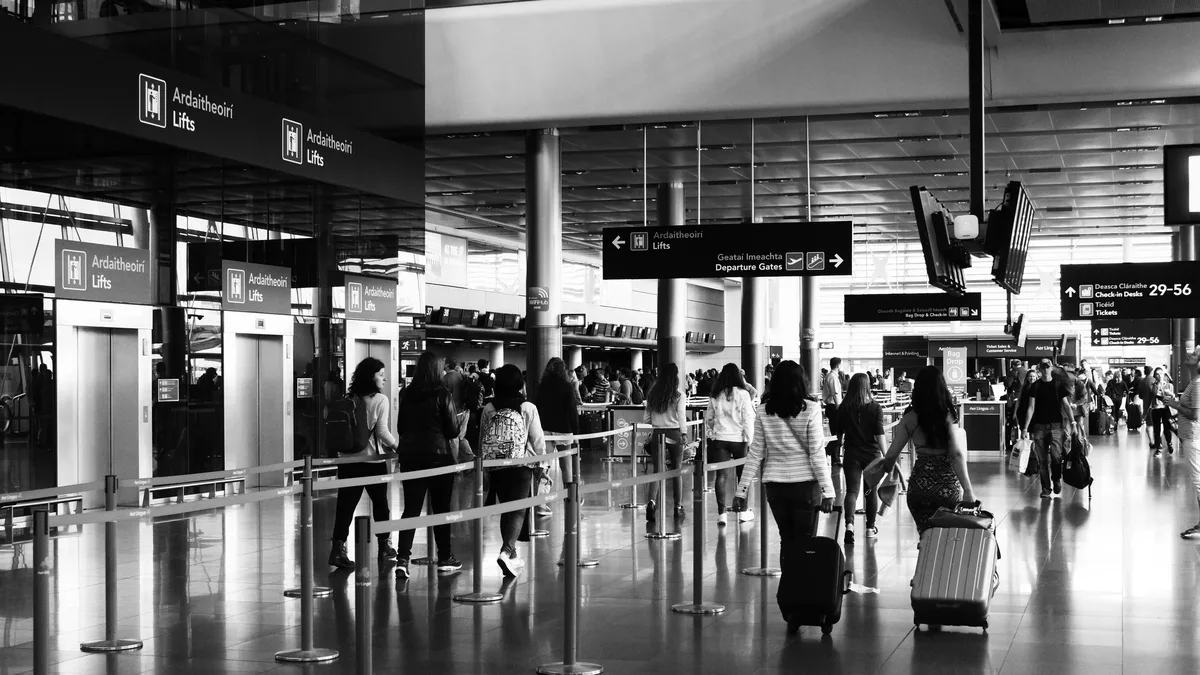
Agentic artificial intelligence is poised to radically alter passenger journeys and airport operations, according to AI pioneer Chetan Dube. This autonomous technology could eliminate nearly all wait times by predicting issues before they occur, moving airport management from reaction to prediction.
Frustration in the terminal often stems from airline issues or government agency processes like security and immigration, areas outside an airport's direct control. The US Department of Transportation receives over 80,000 complaints about air travel annually, highlighting systemic challenges. Agentic AI offers a solution by working with minimal human oversight, understanding natural language, and making independent decisions to solve problems in real time.
Agentics could eliminate nearly all wait times
Current AI helps predict passenger flows and open security lanes proactively. An agentic operating system would go further. By receiving data from all airlines, it could learn and predict exactly when security needs to increase or decrease staffing. It could create staff schedules months in advance based on airline scheduling lead times.
The financial impact is significant. Ground delays are costly. Agentic AI could prevent planes being held due to security backups, avoiding downstream delays and fines.
| Region | Cost per minute of ground delay |
|---|---|
| EU | €166 |
| US | $100.80 |
These costs equate to billions in fines worldwide each year.
Airport retail gets an upgrade
Passengers often queue for security, then again for food or coffee, then again to board. Agentic AI can remove that middle retail queue. Global retail is already adopting the technology, with its market predicted to grow to over $231 billion by 2031. Airports must catch up.
In practice, agentic AI can dynamically schedule store openings and closings, determine required staffing levels, and handle all inventory and ordering. The system learns over time, identifying demand spikes and ordering stock accordingly. If deployed across all terminal retail, it can estimate real-time footfall for each location throughout the day.
Predictive airports and airline advantages
The core theme is prediction. Airports can use agentic AI to forecast delays, equipment failures, baggage issues, and crowding before they happen. Every aspect of travel could be known and planned for in advance. As biometrics and digital identity integrate with AI, passengers might move from kerb to gate without repeatedly showing documents. With streamlined processes and dynamic staffing, the need for expansive check-in halls may be reduced.
For airlines, the technology localises monitoring and decision-making for delays, optimises flight times and routes, and maximises fuel efficiency. This minimises delays, decreases overheads, and increases customer and employee affinity. Agentic AI can change flight routes instantly due to weather or traffic, governed by human safety parameters. It can also continuously monitor aircraft health, predict maintenance needs, and schedule retirement based on historical data, acting as what Chetan Dube calls "lifesaving technology."
Agentic AI in action today
Early implementations are already showing results. Saudia Airlines uses an AI-powered Travel Companion for end-to-end booking via chat. Eindhoven Airport employs AI to improve baggage handling, decrease wait times, and boost customer satisfaction. Air Canada has used it to rewrite disruption management, shortening average resolution time from 12 hours to 10 minutes.
The technology is nowhere near its full potential. Within this decade, agentic AI could provide super intelligent, asynchronous digital employees offering instant service with zero wait time. The airports and airlines that adapt quickest will win loyalty. Those that do not will continue to burnout staff and lose customers.