United Airlines Suspends Newark-Dubai Route
United Airlines has suspended its 15-hour long-haul route from Newark Liberty International Airport to Dubai International Airport due to the ongoing war
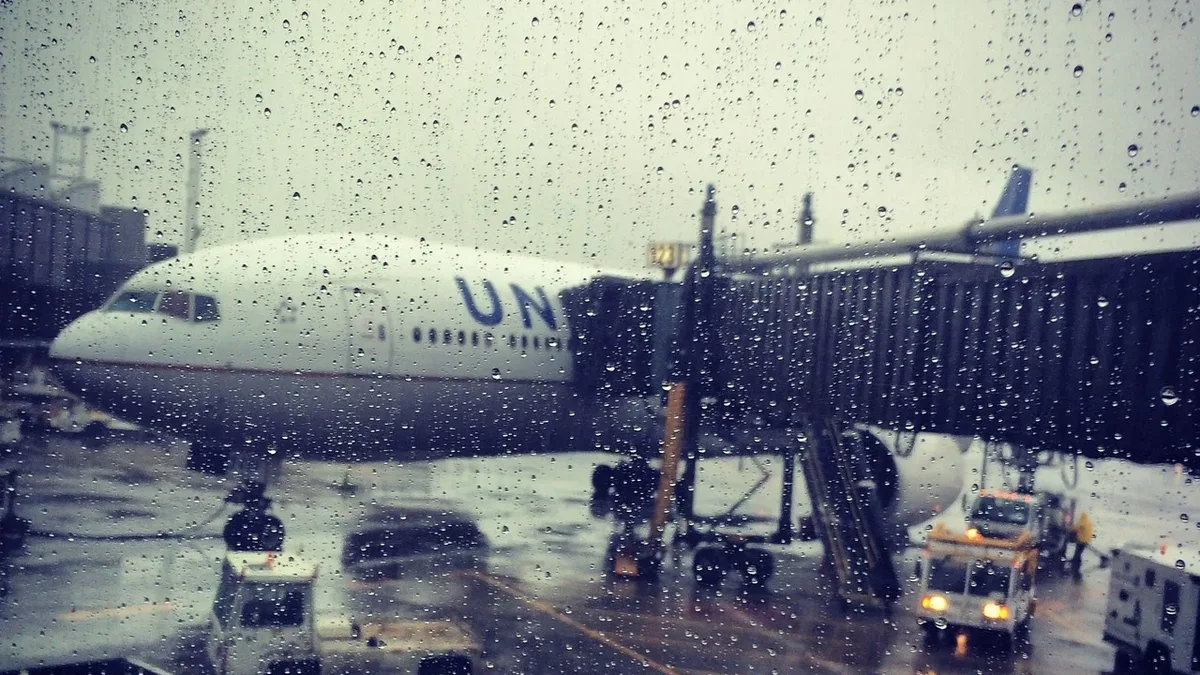
United Airlines has removed all flights from Newark Liberty International Airport (EWR) to Dubai International Airport (DXB) for the upcoming winter. This is due to the ongoing war in Iran, and the consequential continuation of softer demand. United has not flown to DXB since the war broke out in February 2026.
United Continues To Suspend Flights To Dubai
The Star Alliance member introduced nonstop service from EWR, which is the carrier's leading transatlantic hub, to DXB in March 2023. This was in partnership with Emirates, which encompasses a codeshare agreement, reciprocal access to loyalty programs and lounges, and more. Flights operated daily until the war in Iran forced them to stop in February 2026. Emirates continues to serve EWR daily via Athens International Airport Eleftherios Venizelos (ATH).
Until this week's update, United's plan was for the long nonstop route, which covers 5,962 nautical miles (11,042 km) each way, to return on October 24, 2026. That's a day before United, like other northern carriers, will switch to winter schedules based on IATA slot seasons.
That plan has now changed. The latest information, which is still liable to change depending on the stability of the Gulf, is that flights will return on March 27, 2027. That is the day before northern airlines switch to summer schedules. United will run daily using the 350-seat Boeing 777-300ER. This development comes a few weeks after fellow Emirates partner Air Canada pushed Toronto to DXB flights to 2027.
United's 777-300ERs are the carrier's highest-capacity international-configured equipment. There are 60 seats in Polaris (1-2-1), 24 in Premium Plus (2-4-2; 38 pitch), 62 in Economy Plus (3-4-3; 34), and 204 in the regular main cabin (3-4-3; 31). The 777-300ER also has considerable space for freight, which can make a difference to the profitability of long-haul routes.
United Between Newark & Dubai
Let's focus on March 2025 to February 2026, which was when United last flew to DXB. In that period, the US Department of Transportation (DOT) indicates that the airline transported 169,212 round-trip passengers between EWR and DXB. This long airport pair was United's ninth most-trafficked market from New Jersey across the North Atlantic. Only London Heathrow, Tel Aviv, Paris CDG, Rome, Frankfurt, Dublin, Brussels, and Lisbon had more passengers.
Some 83.1% of DXB seats were filled, which was about the same as for the carrier's full transatlantic operation from EWR. Given how many premium seats were available to/from DXB, it must be assumed that United filled a decent number of them. Unfortunately, DOT data does not distinguish between cabins when disclosing the load factor.
Booking data available via OAG Traffic Analyzer sheds more detail on where the 169,212 round-trip passengers went. It is estimated that 42% of the traffic flew from elsewhere in North America or in Latin America to DXB via EWR. Houston George Bush Intercontinental Airport (IAH) to DXB was the most popular segment.
26% of the passengers transited to another service at both EWR and DXB. San Diego to Bahrain was first, presumably for military reasons. 23% of the total traffic only flew between EWR and DXB. The remaining 9% originated/ended in EWR but transferred to an Emirates flight in DXB (EWR to Hyderabad was number one). In total, approximately 34% of United's passengers also flew Emirates.
Emirates Between Dubai & Newark
For now, Emirates' traffic information via the DOT is only available until April 2026. In March (the month after the war in Iran started), and April, 31,675 round-trip passengers were carried between Dubai and Newark via Athens. Compared to the same two months in 2025, traffic rose by 11%, pushing up the load factor by seven percentage points to 72.8%. The traffic growth was not surprising, as United's nonstop flights did not operate, and more passengers flew Emirates instead.
The Boeing 777-300ER used by United for this route has a significant capacity for freight, which can impact the profitability of long-haul routes. The aircraft has 60 seats in Polaris, 24 in Premium Plus, 62 in Economy Plus, and 204 in the regular main cabin. The suspension of the Newark-Dubai route by United and the postponement of the return to the Middle East's busiest airport by Air Canada reflect the ongoing uncertainty in the region.