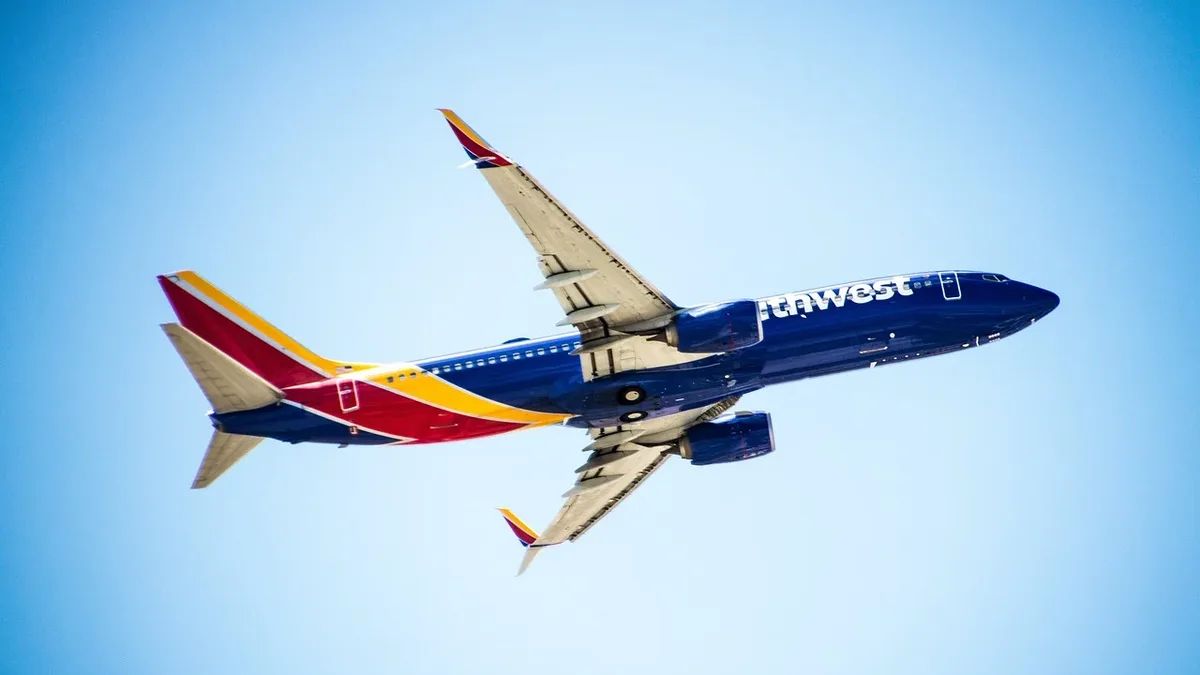
WestJet CEO Calls for National Aviation Strategy to Cut Costs
WestJet CEO Alexis von Hoensbroech urges the Canadian government to implement a National Aviation Strategy, arguing that current airport charges and regulations are undermining affordability and competitiveness despite falling base fares.
WestJet CEO Alexis von Hoensbroech is calling for a Canadian National Aviation Strategy to address soaring costs and a stark competitiveness gap with U.S. airlines. He cited Canada's ranking of 101st out of 116 countries for travel price competitiveness and called for a review of airport charges and passenger regulations.
Canadian airlines face significantly higher operating costs than their U.S. competitors. This is due to taxes, fees, and regulatory burdens. Costs associated with government regulations, third-party fees, taxes, and airport charges have doubled. A key example is the airport improvement fee paid by passengers. In Canada, this can exceed $40, while in the United States it is capped at US$4.50.
Other cost disparities are systemic. Canadian airlines pay all air-navigation costs, a model subsidized in the U.S. They also absorb high passenger-rights costs, expensive emission offsets, and some of the highest taxes and fees. Canada ranks 105th out of 119 countries for airline industry cost competitiveness. Domestic airlines face higher costs than their U.S. competitors in areas ranging from air navigation to emissions offsets and customer compensation.
Labour and operational disruptions
Canada's aviation sector is marked by repeated labour disruptions, while the U.S. has not seen a major airline strike since 1993. Federal laws in the U.S. severely curtail unions' ability to walk off the job. Over the past three and a half years, strikes by Air Canada and WestJet staff have briefly halted operations at the country's two biggest airlines. The threat of job action from pilots at WestJet and Air Transat was a real possibility during recent contract talks. Minimal COVID-19 support from the Canadian government left depleted airline balance sheets, another difference from the U.S. experience.
The industry has also consolidated. The budget carrier Lynx Air collapsed. WestJet folded its low-cost Swoop subsidiary into its mainline service and bought Sunwing Airlines.
WestJet's strategic pivot to Calgary
Amid these challenges, WestJet is deepening its commitment to Calgary. An October 2022 memorandum of understanding formalized plans to make the city its sole global connecting hub. The airline will base its widebody fleet there. WestJet now serves more than 100 non-stop destinations from Calgary, nearly twice its pre-pandemic total. The airline cites Calgary as a model for coordinated investment, noting the attraction of a Lufthansa Technik engine repair facility supported by a multi-billion-dollar contract.
Call for a national aviation strategy
Alexis von Hoensbroech outlined these issues in a speech to the Calgary Chamber of Commerce, addressing rising fuel costs and a strained system. Geopolitical tensions have contributed to a doubling of jet fuel costs, adding over $1 billion to WestJet's expenses this year. Weaker demand in some international markets adds to the pressure. Von Hoensbroech argues that a coordinated National Aviation Strategy is needed to address air travel affordability, regional connectivity, and competitiveness collectively.
He called for a simpler Air Passenger Protection Regulations (APPR) system. The current framework is complex, costly, and confusing, he argued, and does not hold many critical providers in the aviation sector accountable for disruptions. WestJet supports proposed legislative measures to reduce the risk of prolonged industrial action, including enhanced mediation and longer conciliation periods. The airline also maintains that continued federal government direct financing to some airlines has unintentionally swayed market dynamics.
Von Hoensbroech stated he was thankful the current government is examining reforms around airport governance, labour rules, and consumer protections. He cautioned against viewing issues in isolation. "Any proposed model must pass a simple test: does it keep travel affordable, enhance Canada's competitiveness, and deliver a better journey for travellers?" he said. WestJet believes any changes to airport structures must ensure revenue is reinvested in infrastructure and measures to reduce travel costs.
Employment relations professor Geraint Harvey noted any national industrial strategy would need to incorporate the views of consumers and the 265,000 workers directly employed in aviation. Despite the cost challenges, Canada placed 11th overall in the 2024 travel and tourism competitiveness index, beating all other North and South American countries in the business environment category. WestJet's advocacy continues to focus on the structural reform of airport charges and passenger rights to improve the system's foundation.