TSA's New CT Scanners Force Some Carry-Ons Into Checked
The TSA's nationwide rollout of CT scanners is forcing some standard rolling carry-on bags to be checked due to a narrower tunnel opening, despite a $781.2
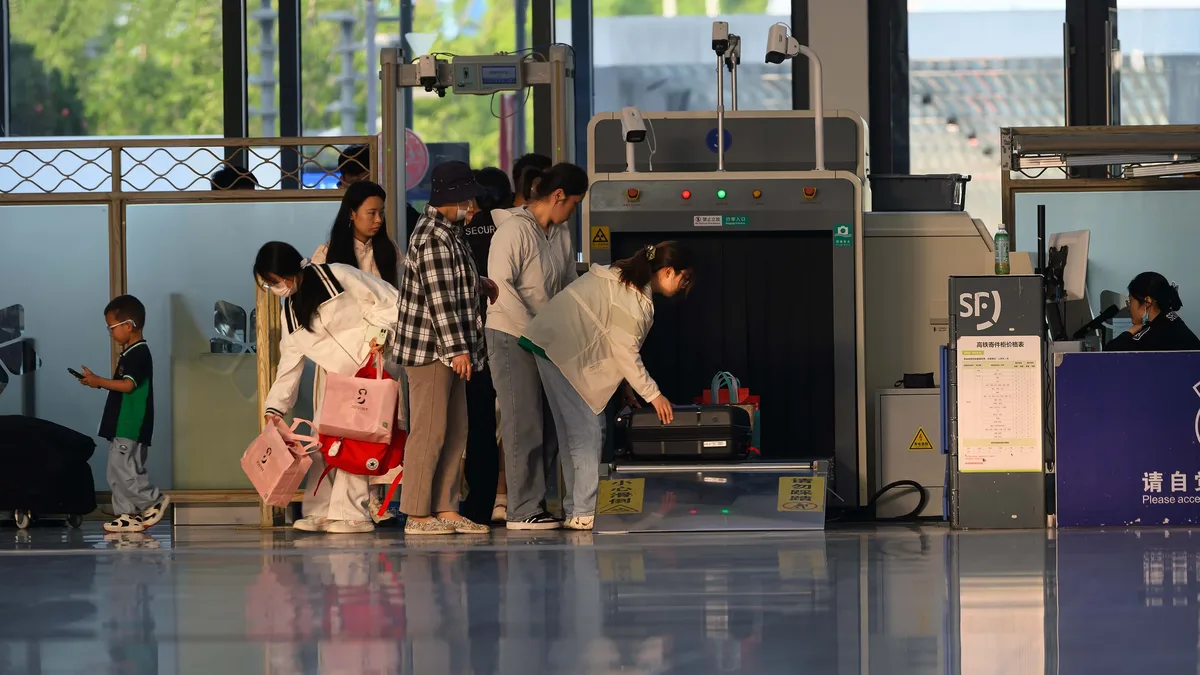
The Transportation Security Administration's $781.2 million rollout of new computed tomography (CT) scanners is forcing a growing number of ordinary rolling carry-on bags to be checked at airport security. The scanners have a narrower tunnel opening than the older X-ray machines they replace, creating a physical mismatch with some luggage that meets airline size limits.
The Half-Inch That's Changing Security
The core issue is a difference in physical dimensions. TSA's new CT units scan bags through a tunnel opening roughly 24.5 inches wide by 16.5 inches tall. This is slightly smaller than the opening on many older X-ray machines. The difference of well under an inch per side is proving significant at the checkpoint.
As of July 6, 2026, TSA had installed 1,162 CT units across 296 airports. The upgrade began with limited testing in 2018 and scaled up after a $781.2 million contract was awarded in 2022. The scanners generate rotatable, high-resolution 3D images, allowing passengers to leave laptops and travel-size liquids inside their bags. However, the smaller entry tunnel is a trade-off for that improved imaging capability.
Why Some Compliant Bags Get Rejected
A standard airline carry-on allowance of about 22 by 14 by nine inches still clears the new CT tunnel. The problem arises with larger, expandable "maximum-capacity" roller bags marketed as carry-on-compliant. These models are built right up against the outer edge of airline limits and can bulge further when packed full.
Expandable luggage can change shape when fully packed. A case that fits through an older X-ray tunnel with clearance can become noticeably wider or taller once its expansion section is filled, leaving little margin for the CT scanner's smaller opening. This creates a gap between the airline's baggage allowance and the scanner's physical opening.
The Costly Outcome for Travelers
TSA guidance states officers presented with an oversized bag can hand-inspect it, redirect it to a lane with older equipment, or advise the traveler to check it. Simple Flying reports the last option is becoming the default outcome at many CT-equipped checkpoints, as the agency has stated some larger carry-ons simply will not fit.
The consequences are practical. A turned-away bag often means walking back to the ticket counter, paying a same-day checked-bag fee, and racing a boarding deadline. There is a parallel risk for photographers, as the same high-powered imaging that lets electronics stay packed can fog or ruin undeveloped film still loaded in analog cameras unless a hand inspection is requested.
The practical fix is to measure a packed bag against its actual dimensions rather than trusting the manufacturer's tag. Frequent flyers with hard-shell expandable cases, families traveling with one oversized shared bag, and photographers are the groups most likely affected.
Horizon 25 and Checkpoint Privatization
This physical change coincides with an administrative shift. On August 24, 2026, newly confirmed TSA Administrator David P. Cummins unveiled the 'Horizon 25' strategy. It retires the TSA Gold+ program in favor of an expanded Screening Partnership Program (SPP), which increases the role of private contractors in running checkpoints.
Currently, only about 20 commercial airports, roughly 4.5% of the total, participate in SPP. Under the program, airports use private screening contractors under federal oversight. TSA has a statutory 60 days to approve or deny any airport's application to join. Reporting indicates Tampa International Airport recently opted to keep its checkpoints staffed by federal officers.
The Push for Private Contractors
The push for privatization follows a disruption. A partial government funding lapse between February and April 2026 led to more than 1,000 TSA officer resignations, according to DWU Consulting's analysis. Checkpoints staffed by federal officers absorbed delays, while airports in the SPP with contractor-employed screeners were largely insulated.
This contrast is central to why Horizon 25 leans into contractor staffing. Administrator Cummins, who came from the private sector, frames private-sector involvement as a resiliency measure. An SPP airport has a second, non-federal payroll to fall back on during a federal budget standoff.
Growth from 20 airports to a larger share of the roughly 430 commercial airports would take years. The strategy cannot yet answer which change a traveler will encounter first: a contractor-run checkpoint or the next generation of scanner with an even narrower tunnel.