Boston Logan
| IATA code | BOS |
|---|---|
| Terminals | A, B, C, E |
| Airlines served | Major U.S. and international carriers |
| Getting there | Road (I-90, I-93), MBTA subway and bus, ferry |
| Original use | Commercial aviation |
| Country of origin | United States |
| First created | 1920s |
Origin and history
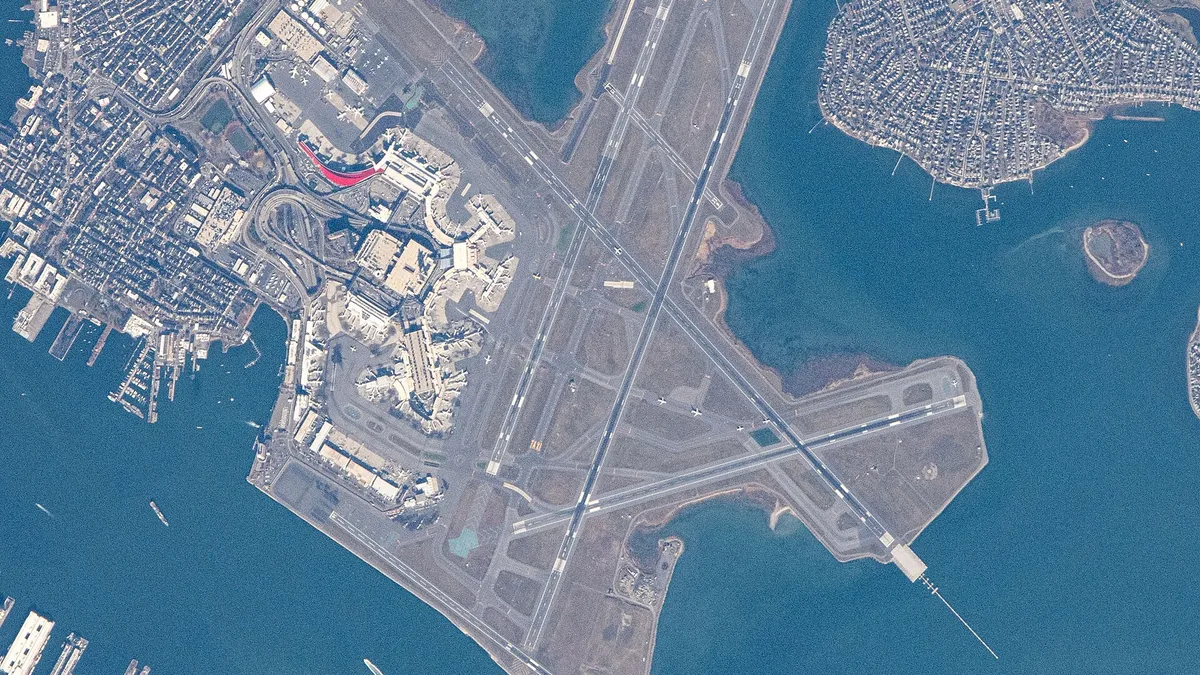
Boston Logan International Airport is a major airport located in East Boston, Massachusetts, United States. It was established in the early 20th century, with its initial development occurring in the 1920s. The airport was named after General Edward Lawrence Logan, a local military figure from Boston, in the 1950s. Its creation was driven by the growing need for a dedicated airfield to serve the New England region. The airport's land was originally a series of islands and tidal flats in Boston Harbor, which were substantially filled in over decades to form its current footprint. It has evolved from a single small airfield into a complex of multiple terminals and runways serving millions of passengers annually.
What it is for
Boston Logan International Airport functions as the primary aviation gateway for the New England region of the United States. It provides scheduled commercial passenger service to domestic and international destinations. The airport also supports significant cargo operations, facilitating the movement of goods. It serves as a focus city for several airlines, offering numerous non-stop routes, though it is not a traditional hub with a single dominant carrier. General aviation and military operations also utilize specific areas of the airport facility. Its role is critical for the economic connectivity and transportation infrastructure of Boston and the surrounding states.
Boston Logan parking
Parking at Boston Logan International Airport is organized into several distinct facilities, each serving different needs and terminal proximities. The Central Parking garage is connected to all terminals via pedestrian walkways and is the most convenient option for terminal access. Economy parking lots offer lower daily rates but require a shuttle bus ride to reach the terminal buildings. There are also designated parking areas for hourly parking, cell phone waiting, and premium services. Valet parking is available at certain terminals for passengers seeking the highest level of convenience. Passengers are advised to check the airport's official website for real-time space availability and current rate structures before their journey.
Boston Logan tsa wait times
Security checkpoint wait times at Boston Logan can vary significantly based on the time of day, week, and specific terminal. Generally, early morning and holiday periods experience the highest passenger volumes and consequently the longest queues. The airport provides estimated wait times on its website and via signage at the checkpoints to assist with planning. Travelers are strongly advised to arrive at least two hours before a domestic flight and three hours for international travel to accommodate security screening. Enrollment in TSA PreCheck or CLEAR can provide access to dedicated lanes with typically shorter wait times at participating checkpoints. Peak congestion often occurs at Terminal A and Terminal E checkpoints due to their layout and airline assignments.
Boston Logan food
Boston Logan offers a wide variety of dining options across its four terminals, with a focus on local Boston and New England establishments. Passengers can find everything from quick-service coffee shops and bakeries to sit-down restaurants serving full meals. Notable local brands like Legal Sea Foods, Wahlburgers, and Samuel Adams are represented within the concourses. Dining choices range from classic New England clam chowder and lobster rolls to international cuisines such as sushi, Italian, and Mexican. Most food and beverage outlets are located post-security, allowing passengers to dine while waiting for their flights. Options are available for various dietary preferences, including vegetarian, vegan, and gluten-free items at select locations.
Boston Logan terminals
Boston Logan International Airport operates four active passenger terminals labeled A, B, C, and E, each functioning as a separate building. Terminal A primarily serves Delta Air Lines and WestJet, featuring a modern design with two piers. Terminal B is the largest and most complex, housing American Airlines, United Airlines, Southwest Airlines, and numerous other carriers across two connected buildings. Terminal C is exclusively used by JetBlue Airways and is a central component of its operations in Boston. Terminal E is the designated international terminal, handling all non-precleared arrivals and departures for various airlines. The terminals are connected landside by the Central Parking garage, shuttle buses, and a pedestrian walkway system, though airside connections between terminals are not available.
Boston Logan code
The official International Air Transport Association (IATA) three-letter location identifier for Boston Logan International Airport is BOS. This code is used globally for flight planning, ticketing, baggage routing, and all airline operational systems. The International Civil Aviation Organization (ICAO) assigns the four-letter location indicator KBOS for use in air traffic control and official aviation documentation. These standardized codes distinguish the airport from all other airports worldwide. Passengers will see the BOS code on their flight itineraries, boarding passes, and baggage tags. The airport is also sometimes referenced by its full name or simply as Logan Airport in common local parlance.
Pros and cons
A primary advantage of Boston Logan is its extensive range of non-stop destinations, particularly to Europe and across the United States, owing to its focus city status for several airlines. The airport's location relative to downtown Boston is a significant pro, being only about three miles away, allowing for relatively quick and affordable transit via the MBTA Blue Line or Silver Line bus. Conversely, the airport's layout is a notable con, as the separate terminals lack airside connections, forcing connecting passengers to exit security, claim baggage, and re-check, which is a major inconvenience. Roadway congestion on the airport approaches, especially during peak morning and evening rush hours, is a persistent problem that can severely impact travel time. The age of parts of the infrastructure, particularly in Terminal B, can lead to cramped gate areas and confusing wayfinding compared to newer facilities.
Who it suits
Boston Logan suits passengers originating from or traveling to the city of Boston and the broader New England region, for whom it is the most direct and often only full-service airport option. It is well-suited for business travelers due to its high frequency of flights to major commercial centers like New York, Washington D.C., and Chicago, as well as its proximity to downtown. The airport suits international travelers heading to Europe, as it offers one of the densest networks of transatlantic routes on the U.S. East Coast outside of New York. It is less suited for passengers making complex connections between different airlines, as the lack of airside transfers creates a burdensome process. Travelers with very tight schedules may find the variable roadway and security wait times a significant risk factor. It is a practical choice for those who prioritize destination access over terminal convenience and who can navigate its specific logistical challenges.